For Neoclouds, Sovereign Data Centers & GPU Cluster Operators

Networking for AI factories. Delivered.

Skip the integration debt. EPS Global assembles the complete networking stack behind every AI factory — optics, switches, fabric software, cabling, power and cooling — into one validated solution. Anchored by 25 years of Coherent optical distribution. Deployed from 28 global locations.

Book a Technical Consultation

A pre-sales engineer is assigned within one business day.

25yrs
Coherent authorized partnership
28
Global stocking locations
9
Validated technology partners
1
Single source of procurement
The Problem

AI factories don't stall on GPUs. They stall on the network.

A neocloud building an AI factory has to assemble power, cooling, structured cabling, optical interconnect, open switches, AI fabric software, cluster management, and network intelligence — each from a different specialist.

"Integration debt" — months managing 10+ vendors before the first GPU collective even runs.

Each vendor optimizes for their own layer. None integrate the whole. The result: mismatched delivery schedules, validation rework, and finger-pointing when something doesn't talk to something else.

Without a VAD doing the work for you

  • 10+ separate vendor relationships per build phase
  • Optical supply chain risk at neocloud volumes
  • Fabric OS lock-in or DIY SONiC integration
  • No software intelligence above the fabric
  • Power, cooling, OOB out of scope
  • Cabling design and labelling done in-house
  • Onsite install at five different timelines
The Validated Stack

The Full Ecosystem. Eight layers. One commercial relationship.

Every layer of the sovereign data center networking stack — from in-rack DAC to network intelligence — supplied, validated, and delivered through a single EPS Global engagement.

Coherent
Optics & AOC · 25-yr partnership
Celestica
Network switching
Maia Edge
AI cluster management
Aria Networks
Network intelligence
Hedgehog
SONiC fabric (option A)
Aviz Networks
SONiC fabric (option B)
Amphenol
DAC & structured cabling
Vertiv
Power, cooling, OOB
Proficium
Design & install services
Coherent
Optics & AOC · 25-yr partnership
Celestica
Network switching
Edgecore
Network switching
UfiSpace
Network switching
Maia Edge
AI cluster management
Aria Networks
Network intelligence
Hedgehog
SONiC fabric (option A)
Aviz Networks
SONiC fabric (option B)
Amphenol
DAC & structured cabling
Vertiv
Power, cooling, OOB
Proficium
Design & install services
The Architecture

Eight layers, validated end-to-end.

Hover or tap any layer to explore the partner technologies, reference specs, and 1,024-GPU POD quantities behind each tier of the stack.

Loading interactive architecture diagram...
Reference Build

What a 1,024-GPU POD looks like in BoM.

Indicative quantities for a representative POD on the EPS Global stack — three-tier Clos topology, full bisection bandwidth, single-source procurement.

52
Celestica switches
4 spine · 16 leaf · 32 ToR
~700
Coherent optical modules
400G / 800G / 1.6T
~256
Coherent AOC
Inter-rack runs
~1,024
Amphenol DAC
In-rack server-to-ToR
~800–900 Coherent optics and AOC per POD — the single largest line in the BoM by unit count, reflecting why a 25-year authorized Coherent partnership is the anchor of this stack. Plus 2× Vertiv rPDUs per rack, in-rack CDU 121 cooling, and Avocent ACS8000 OOB management.
Network Architecture

Scale Up, Scale Out, Scale Across.

AI workloads don't scale linearly. They require distinct networking strategies at the node, cluster, and multi-site levels. Here is how our validated stack supports your growth without bottlenecks.

Scale Up: Intra-Rack Density

Maximizing GPU compute density within the individual rack. As GPU power requirements surge, the network must deliver ultra-low latency from the server to the Top-of-Rack (ToR) switch.

  • High-Speed Interconnects: Lossless, short-reach copper and optical connectivity for server-to-ToR links.
  • High-Radix Switching: Maximizing port density per rack unit to support dense GPU configurations.
  • Advanced Infrastructure: High-capacity power distribution and liquid cooling to support next-gen silicon thermals.

Scale Out: The AI Cluster Fabric

Expanding to 1,024+ GPUs requires a lossless, non-blocking Clos topology. This is where traditional networks fail and AI-specific Ethernet fabrics take over.

  • Next-Gen Optics: 800G and 1.6T transceivers leveraging advanced photonics for massive bandwidth.
  • Lossless Ethernet: Open networking leaf/spine architectures running optimized fabric operating systems.
  • Workload Optimization: Tuning RoCEv2 / RDMA traffic to accelerate GPU collective operations.

Scale Across: Distributed AI

Connecting multiple sovereign data centers to act as a unified, distributed AI factory. Essential for massive training runs that exceed the power capacity of a single facility.

  • Data Center Interconnect (DCI): High-capacity, long-haul optical transport for metro and regional links.
  • Network Intelligence: SDN-driven traffic engineering and capacity planning across distributed sites.
  • Unified Management: Seamless orchestration and telemetry across geographically dispersed GPU clusters.
Inference Infrastructure

Built for the demands of inference

Inference workloads are latency-sensitive, high-concurrency and multi-tenant, and you run them close to your users. For an inference business, the network is cost-per-token: idle GPUs and dropped packets are capacity you've paid for and can't bill. EPS Global builds and validates the stack that keeps that capacity earning.

Right-sized PODs

From sub-256-GPU clusters to multi-tenant serving racks, the bill of materials matches the deployment. We size the same eight validated layers to the workload in front of you, so your capital buys serving capacity.

Low-latency, multi-tenant fabric

Lossless Ethernet with tenant isolation for high-concurrency token serving. Many customers share one fabric at predictable latency, the operating model GPU-as-a-Service depends on. Your GPUs stay saturated and cost-per-token stays predictable.

Deploy close to demand

Run inference close to its users. EPS Global sources and stocks the same stack in-region across 28 locations, so capacity sits next to the people it serves. Shorter paths cut latency and egress, improving your unit economics region by region.

Inference is a regional workload. With stock in 28 locations, you can deploy wherever sovereignty requires.

Talk to a pre-sales engineer →
The EPS Global Edge

What a hardware-only distributor can't do for you.

EPS Global is a value-added distributor — not a box-mover. The neocloud stack is assembled, validated, and delivered as a single engagement.

Optical anchor depth

Twenty-five years of authorized Coherent distribution. Volume pricing and supply chain depth that general distributors cannot match — critical when optics is ~800 units per POD.

Strategic software layer

Maia Edge and Aria Networks are new EPS Global relationships at the AI cluster management and network intelligence layers — differentiation no hardware-only VAD can replicate.

Choice, not lock-in

Hedgehog or Aviz Networks for the SONiC fabric OS — both validated on Celestica hardware. EPS Global engineering advises on the right fit for your operations model.

Complete physical infrastructure

Vertiv closes power, cooling, rack enclosures, and OOB management within the same EPS Global engagement. Amphenol covers DAC and structured fibre.

Professional services wrapped in

Proficium provides infrastructure design, custom cable manufacturing, and global install. Their BoM flows directly into EPS Global procurement.

Global fulfilment

28 EPS Global stocking locations across Europe, North America, and Asia Pacific support initial POD builds and ongoing replenishment of optics, AOC, PDUs, and cabling.

Trusted by sovereign data center operators

Deployed across neocloud and sovereign AI workloads.

CUSTOMER LOGO 1
CUSTOMER LOGO 2
CUSTOMER LOGO 3
CUSTOMER LOGO 4
CUSTOMER LOGO 5
CUSTOMER LOGO 6
CUSTOMER LOGO 7
CUSTOMER LOGO 8
CUSTOMER LOGO 1
CUSTOMER LOGO 2
CUSTOMER LOGO 3
CUSTOMER LOGO 4
CUSTOMER LOGO 5
CUSTOMER LOGO 6
CUSTOMER LOGO 7
CUSTOMER LOGO 8

Placeholder carousel — customer logos to be confirmed pending PR approvals.

From the Lab & the Field

Unboxings, vendor interviews, and architectural deep-dives.

Hardware in the rack, optics on the bench, and conversations with the engineers who build the silicon.

Celestica DS5000 800G data center switch unboxing
Unboxing

Unboxing Celestica's High-performance 800G Data Center Switch — DS5000

Explore the Celestica DS5000 800G switch — a 64-port, 51.2 Tbps powerhouse built on Broadcom's Tomahawk 5 ASIC.

Edgecore AIS800-64D 800G AI/ML networking switch unboxing
Unboxing

Next-Gen 800G Networking for AI & ML — Unboxing the Edgecore AIS800-64D

A deep-dive of the AIS800-64D, exploring how its 51.2 Tbps Tomahawk 5 architecture and flexible 800G port configurations accelerate AI and ML workloads at scale.

Julie Eng, Coherent CTO, on Co-Packaged Optics and pluggable transceivers
Vendor Interview

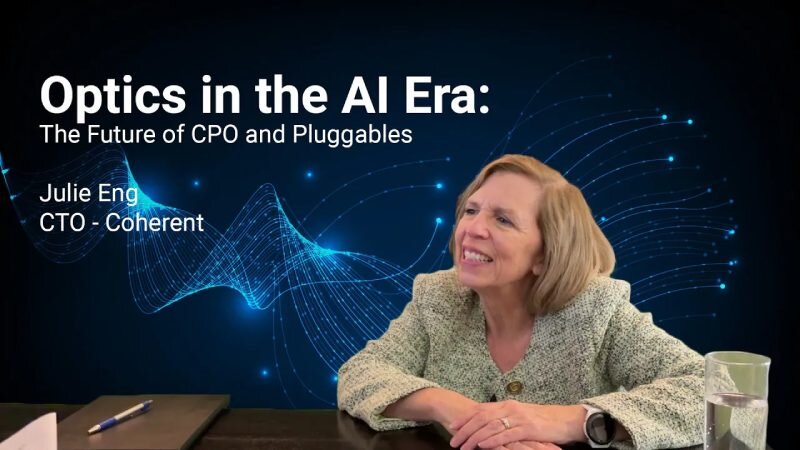
Optics in the AI Era — Coherent's CTO on the Future of CPO and Pluggables

Coherent's CTO Julie Eng breaks down Co-Packaged Optics, the future of pluggable transceivers, and what AI-driven demand means for next-generation data center networking.

Marc Austin, Hedgehog CEO, on building AI networks at half the cost
Vendor Interview

Build Better AI Networks for Half the Cost — In Conversation with Hedgehog CEO Marc Austin

Learn how open networking and disaggregated hardware can deliver superior AI infrastructure performance at half the cost of proprietary solutions.

Neoclouds, AI infrastructure and white box networking — Celestica and EPS Global
Industry Deep-Dive

Neoclouds, AI Infrastructure & the Rise of White Box Networking — Celestica and EPS Global

How Celestica is powering the world's largest hyperscalers and neoclouds, as industry experts unpack the hardware, software, and open networking ecosystems driving today's AI infrastructure revolution.

Seth Haller, EPS Global Director of Sales, on Supply Chain as a Service
EPS Global Insight

"Supply Chain as a Service" — Seth Haller on EPS Global's Philosophy for Customer Success

Seth Haller, Director of Sales for Western US at EPS Global, shares insights from his 36-year career on solving the persistent supply chain problem.

From Design to Production

How an EPS Global sovereign data center build flows.

One commercial relationship across the full deployment lifecycle. Pre-sales engineering at the front, Proficium install at the back.

1

Design

Topology sizing & fabric OS selection

2

BoM

Proficium-generated bill of materials

3

Procurement

Single PO across 9 partners

4

Manufacture

Pre-labelled cables & custom assemblies

5

Logistics

From the nearest of 28 stocking locations

6

Install

Proficium onsite — 5× faster

Frequently Asked Questions

Common questions from sovereign data center operators.

A GPU cluster at this scale requires a non-blocking spine-leaf fabric built on high-radix open Ethernet switches (e.g. Celestica DS3000/SN5600 class), 800G or 1.6T optics at the spine tier, 400G at the leaf, 100G–400G DAC or AOC at the leaf-to-NIC edge, and a SONiC-based fabric OS for automation and telemetry. Above the fabric you need an AI cluster management layer to schedule workloads across GPUs and track utilisation in real time.
Buyers commonly evaluate Celestica, Edgecore, and Delta white-box switches running SONiC for AI fabric builds. Celestica's DN-series and SN-series platforms offer the port density, buffer depth, and ASIC choice (Broadcom, Marvell) suited to 400G, 800G, and 1.6T spine-leaf at GPU-cluster scale, and are available through distribution with validated SONiC interoperability tested against Hedgehog and Aviz Networks fabric OS builds.
Both run on the same Celestica hardware. Aviz SONiC suits GPU-as-a-Service operators who need rich multi-tenant orchestration and day-2 operations tooling. Hedgehog is purpose-built for open networking automation in tightly coupled AI training clusters. The right choice depends on whether you're running dedicated training infrastructure or a shared GPU cloud — pre-sales engineering can scope this against your operational model.
For in-rack and top-of-rack connections (≤100 m), 100G–400G VCSEL-based direct-detect transceivers (SR4, SR8) are standard. For leaf-to-spine links, 400G or 800G OSFP/QSFP-DD is the current design point; 1.6T (2×800G) ports are now available on leading spine ASICs and should be factored into any build with a 3–5 year horizon. For inter-rack, end-of-row, and any campus or DCI links over 500 m, coherent optics — 400G/800G ZR or ZR+ — provide the reach and density required. Coherent transceivers typically represent the largest single line item in a GPU POD bill of materials, so distributor stocking depth and lead time matter significantly.
Short-reach switch-to-switch and switch-to-NIC connections are typically served by 400G or 800G DAC up to 3–5 m or Active Optical Cable (AOC) up to 30–100 m. At 800G and above, connector and insertion-loss budgets are tighter — cable assembly qualification against the specific ASIC and transceiver combination matters. Structured cabling with pre-labelled MPO trunk assemblies is used for longer intra-cage runs and future-proof patching. Cabling is routinely under-specified at planning stage — cable type, reach, polarity, and labelling scheme should be locked in alongside the switch and optics BoM.
A 1,024-GPU cluster at H100/H200 class typically demands 30–60 kW per rack depending on GPU density, requiring high-density PDUs (3-phase, 22–44 kW rated), precision cooling (in-row or rear-door), and out-of-band management for every rack. Power and cooling should be specified concurrently with the networking BoM — vendors like Vertiv supply integrated rack power, cooling, and OOB that are validated against the switch and cabling stack.

Ready to spec your sovereign data center networking stack?

A pre-sales engineer is assigned within one business day of consultation request.